Self Checkout POS System: Top Functions to Look for in a Sales System
Affordable Restaurant POS: Our Retail Deal Platform Streamlines Sales And Stock Management Efficiently
History and Development of Point Of Sales Systems
Have you ever stopped to question how the contemporary Point Of Sales System became? It's a journey that twists and turns through decades of development, reflecting not just technological leaps but likewise the changing rhythm of commerce itself. Think of a busy general shop in the late 19th century-- sales register clattering, clerks scribbling down sales in journals. This was the humble beginning of what would end up being an advanced ecosystem of retail innovation.
The Mechanical Origins
The first stimulate ignited in the late 1800s with the creation of the mechanical sales register. This device was more than just a box to hold money; it was a tool designed to minimize theft and enhance deal accuracy. Photo a shopkeeper pulling a lever, hearing the pleasing "ka-ching" noise, signaling a recorded sale. It's interesting how this easy mechanical device prepared for the sales tracking capabilities we now consider granted.
Electronic Revolution and Digital Dawn
Fast forward to the mid-20th century, and the scene changes considerably. Electronic parts began replacing gears and springs. Unexpectedly, sales data could be recorded digitally, reinventing how companies kept an eye on inventory and consumer habits. Can you envision the leap from punch cards to touchscreen interfaces? This shift didn't just speed things up; it opened a new world of information analytics, making it possible for merchants to expect patterns and customize their offerings.
Secret Turning Points in POS Development
- Mechanical money signs up: Late 1800s, foundational tool for deal accuracy.
- Electronic registers: Mid-1900s, presented digital sales recording.
- Barcode scanners: 1970s, automated item recognition, lowering human error.
- Integrated software application systems: 1990s, merged sales, stock, and client management.
- Cloud-based POS: 2000s onward, made it possible for remote access, real-time information syncing, and scalability.
The Human Touch in a Digital Age
Some doubters ask: with all this automation, do we lose the individual connection at checkout? Here's a twist-- modern POS systems in fact empower personnel to engage more meaningfully with clients by releasing them from tiresome manual jobs. I recall a little shop where the cashier used a tablet-based POS, easily handling stock while chatting with consumers about their choices. The technology wasn't a barrier; it was a bridge.
| Period | Innovation | Impact |
|---|---|---|
| Late 1800s | Mechanical Sales Register | Reduced theft, improved sales precision |
| Mid 1900s | Electronic Registers | Digitized sales taping |
| 1970s | Barcode Scanners | Faster checkout, lowered errors |
| 1990s | Software Combination | Unified sales and inventory management |
| 2000s+ | Cloud-Based Systems | Real-time information, scalability, remote gain access to |
Recalling, the development of the Point Of Sales System is not just a tale of technology-- it's a saga of adapting to the pulse of retail, meeting difficulties, and improving the consumer experience. Next time you view a seamless checkout, remember the winding course that brought us here.

Unloading the Important Components of a POS System
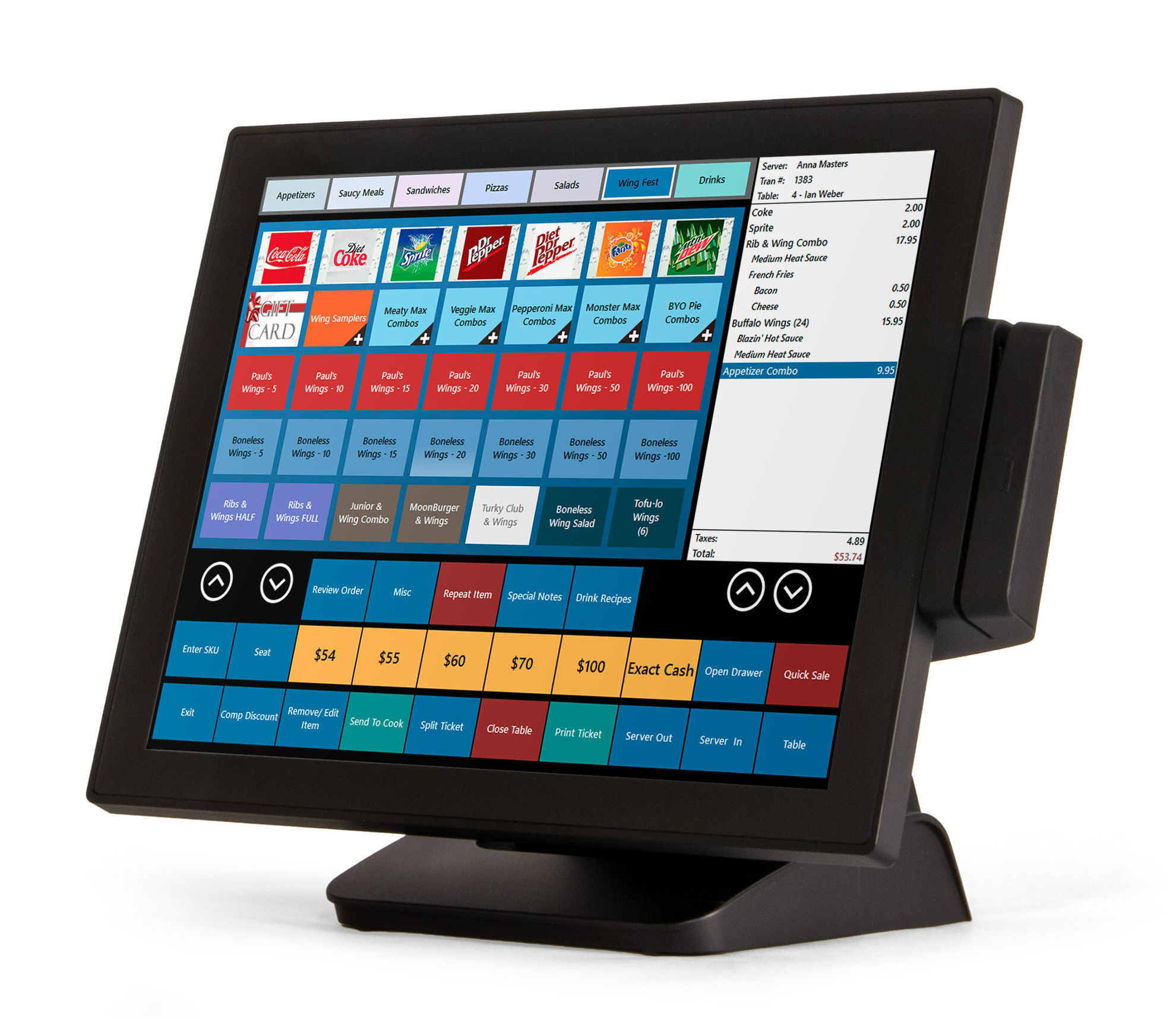
Every reliable Point Of Sales System copyrights on a thoroughly orchestrated ensemble of hardware. Think of a busy café where orders fly in thick and quick-- the money drawer snaps shut, the invoice printer hums, and the touchscreen glows with each deal. This symphony of gadgets is what keeps the cash register ringing and the organization streaming.
Core Hardware Aspects
- Touchscreen Monitor: The maestro directing the POS experience, enabling swift input and seamless navigation.
- Receipt Printer: The tangible proof of purchase, crucial for client trust and record-keeping.
- Money Drawer: The protected vault for physical money, frequently ignored but vital for handling cash deals.
- Barcode Scanner: Speeds up checkout by immediately equating item codes to rates.
- Client Display: Enhances transparency by revealing consumers their billed items and totals in real-time.
What about the less glamorous, yet important elements like the POS terminal CPU!.?. !? It's the brain behind the drape, processing data with accuracy. Without a robust processor, even the sleekest touchscreen becomes a slow traffic jam.
Specialized Hardware for Retail vs. Hospitality
| Part | Retail Usage | Hospitality Usage |
|---|---|---|
| Invoice Printer | High-speed thermal printers for quick checkouts. | Cooking area printers to relay orders straight to cooks. |
| Money Drawer | Heavy-duty with several compartments. | Smaller sized, frequently incorporated with mobile POS. |
| Barcode Scanner | Vital for inventory and prices accuracy. | Less typical; replaced by table numbers or order tickets. |
One common stumbling block? Incorporating all these gadgets so they communicate perfectly. A delayed printer or an unresponsive touchscreen can spiral into long queues and annoyed clients. The essential depend on selecting hardware with tested interoperability and understanding the environment where the POS will run.
Expert Tips for Optimal Hardware Choice
- Focus on toughness: Hardware withstands consistent usage; choose parts ranked for high transaction volumes.
- Examine compatibility: Ensure peripherals sync easily with your POS software to avoid glitches.
- Believe ergonomics: For example, a well-placed barcode scanner can accelerate checkout substantially.
- Consider future scalability: Modular hardware permits you to include or swap components as your business grows.
- Don't ignore power supply requires; a trustworthy UPS can prevent data loss throughout interruptions.
Have you ever observed how a simple cash drawer jam can freeze an entire checkout line? It's these apparently minor missteps that highlight the value of picking hardware developed for your particular retail or hospitality rhythms. When the parts are in consistency, deals stream like a well-conducted orchestra-- smooth, quick, and satisfying.
Opening the Software Application Characteristic That Specify a POS System
Think of standing at a busy checkout, the line extending behind a client with an armful of products. The last thing you desire is for your POS software application to crawl or miscalculate a discount. That's why understanding the basics of software application functionalities can turn turmoil into structured efficiency.
Core Performances That Make or Break the Experience
- Stock Management: Real-time tracking isn't simply a buzzword. It's the backbone that avoids overselling or stockouts. Advanced POS systems sync stock immediately, updating throughout channels instantly.
- Sales Reporting & & Analytics: Numbers tell stories. But do your reports reveal surprise trends like peak purchasing hours or which item bundles boost income? Deep-dive analytics change raw information into actionable insight.
- Worker Management: Clock-ins, commissions, and access controls-- these features protect your operation and inspire your personnel with accuracy.
- Client Relationship Management (CRM): Beyond deals, terrific POS software individualizes consumer experiences, capturing choices to customize promos that really work.
Expert Tips for Harnessing POS Functionalities
- Integrate with Payment Gateways Efficiently: Not all integrations are produced equal. Select systems use native assistance for numerous payment types, including contactless and mobile wallets, minimizing checkout friction.
- Utilize Cloud Abilities: Envision accessing your sales control panel from a beach or a boardroom. Cloud-based POS systems offer flexibility and catastrophe resilience that local-only setups lack.
- Tailor User Functions: Granular approval settings avoid unexpected information breaches and empower personnel with the right tools without frustrating them.
- Automate Regimen Tasks: Set reorder points or schedule daily sales summaries to maximize time for tactical choices instead of mundane tasks.
Table: Comparing Important vs. Advanced POS Software Application Includes
| Function | Important | Advanced |
|---|---|---|
| Stock Updates | Manual or routine sync | Real-time multi-location sync |
| Sales Reports | Fundamental day-to-day summaries | Adjustable, predictive analytics |
| Payment Processing | Standard credit/debit | Contactless, mobile wallets, split payments |
| Consumer Information | Basic purchase history | Behavioral insights and targeted marketing |
Why Some Features Slip Under the Radar
A lot of merchants concentrate on the EMV Compliant POS System shiny front-end functions, however what about the quiet warriors-- like data synchronization latency or the speed of the user interface!.?.!? A slow system can irritate staff members and customers alike, spiraling wait times and errors. Ever seen a line grow since the POS froze? It's a lesson in why performance tuning is just as crucial as function lists.
Ask yourself: is your POS merely a money register replacement, or an effective tool developed to enhance your whole sales procedure? The distinction depends on how deeply you comprehend and use the software application's capabilities.
Fortifying Security in POS Transactions
Have you ever wondered what happens behind the drape when you swipe your card at a Point Of Sales System!.?.!? The undetectable dance of encryption and tokenization safeguards your data in ways that frequently go unnoticed. Not all systems copyright these standards equally. The labyrinth of protecting cardholder data is more than simply a checkbox; it's an essential cornerstone that can make or break trust in any retail environment.
Consider the subtle nuances that separate a robust POS from a vulnerable one. Data encryption isn't merely about encoding info-- it's about developing a solid fortress around sensitive details throughout transmission and storage. Without this, hackers can make use of weak links, turning a basic deal into a catastrophic breach.
Crucial Element to Ensure Compliance and Security
- End-to-end file encryption (E2EE): Encrypts information from the minute of swipe or tap till it reaches the payment processor, rendering intercepted information worthless.
- Tokenization: Changes delicate card details with unique tokens, preventing exposure of actual information during processing.
- PCI DSS adherence: The Payment Card Market Data Security Requirement isn't just a guideline however a plan for safeguarding payment environments.
- Routine security audits: Routine checks recognize vulnerabilities before malicious stars do.
- Firmware integrity: Making sure that POS devices run just licensed software to avoid tampering or malware injection.
Common Oversights That Undermine POS Security
Numerous ignore the risk posed by out-of-date software application variations. Picture a classic tale where a hacker makes use of a recognized vulnerability covered months earlier-- it's like leaving the front door broad open while boasting about your security system. Weak credential management typically leads to unauthorized access; utilizing default passwords or ignoring multi-factor authentication can turn a fortress into a sieve.
Expert Tips for Enhancing Deal Security
- Implement multi-layered authentication to restrict access to POS management consoles.
- Make sure real-time tracking and alert systems remain in place to catch any anomalous activity promptly.
- Train personnel carefully on finding phishing efforts and social engineering methods that target POS vulnerabilities.
- Embrace network segmentation so that POS terminals operate on separated networks, restricting contagion from other jeopardized gadgets.
| Security Function | Function | Specialist Insight |
|---|---|---|
| End-to-End Encryption | Safeguards information during all deal phases | Often underestimated but crucial for preventing man-in-the-middle attacks |
| Tokenization | Replaces sensitive info with tokens | Reduces scope of PCI DSS compliance by limiting direct exposure |
| Firmware Validation | Prevents unapproved code execution | Regular updates and checks are non-negotiable for POS stability |
Eventually, security and compliance in POS deals are not fixed states however vibrant procedures. They demand vigilant adaptation and a proactive mindset. Have you taken a look at whether your system's defenses adjust as quickly as the hazards develop? Disregarding this can turn a single deal into a gateway for breaches that ripple throughout a whole operation.